
Corporate tax filing uae
What this page covers
Corporate tax filing uae
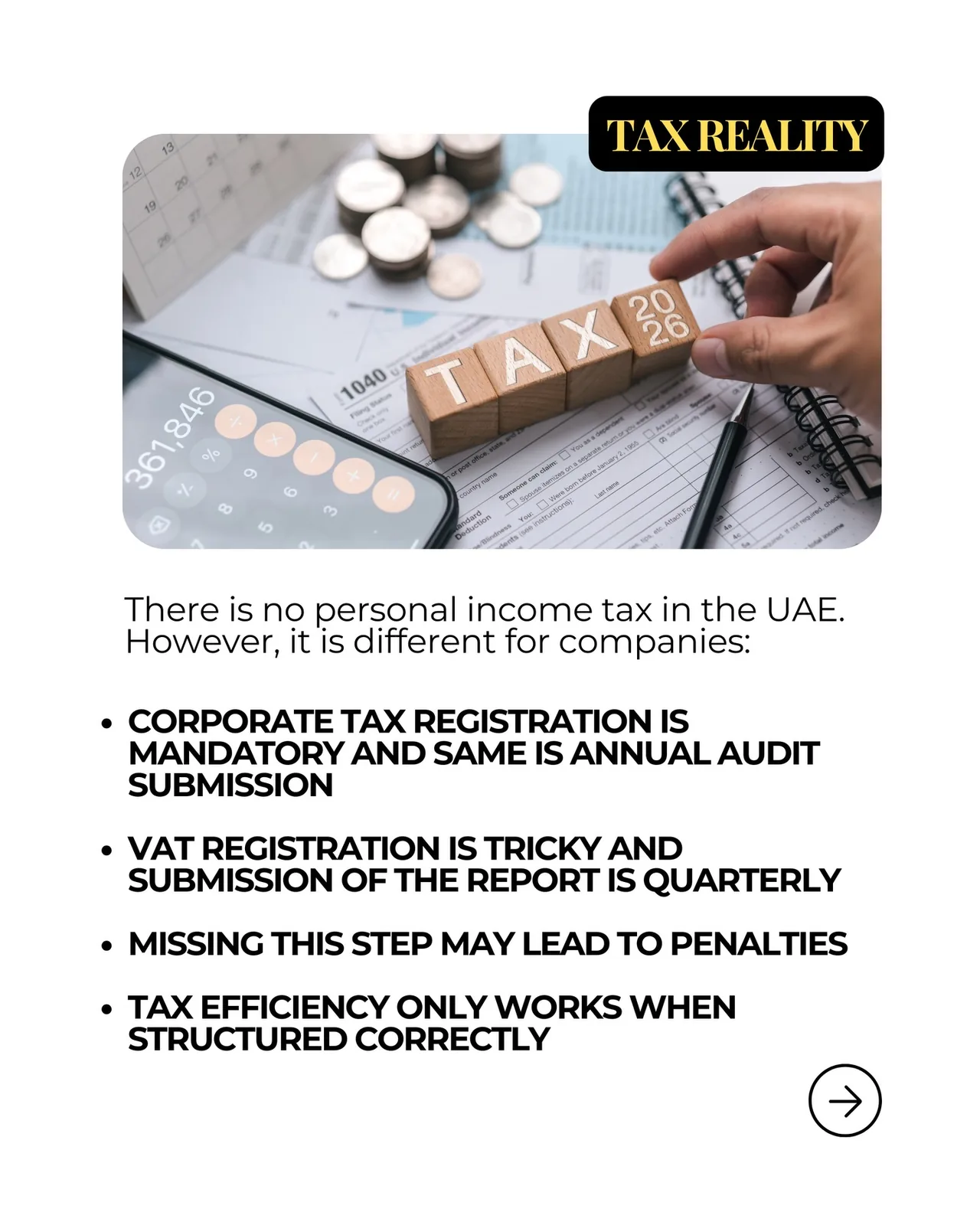
There is no personal income tax in the UAE, but companies must follow clear corporate tax rules, from registration to reporting, to stay compliant with the authorities and avoid unnecessary risk.
Corporate tax registration is now mandatory, and annual audited financial statements are typically required as the basis for accurate tax returns, so timely and correct filing helps your business avoid penalties and keep its tax position efficient and well organised in the UAE.
Companies in the UAE must treat corporate tax filing as a core part of doing business, even though there is no personal income tax. Corporate tax registration is compulsory, and annual audited accounts usually form the foundation for accurate tax returns and proper communication with the authorities.
In brief
- Corporate tax registration is mandatory in the UAE, and companies are expected to keep proper accounts, prepare audited financial statements where required, and submit corporate tax returns in line with local rules and deadlines.
- Missing key steps in corporate tax or VAT registration, filing, or payment can lead to penalties and extra scrutiny, so it is important to keep your reporting timely, accurate, and correctly structured from the beginning.
- Specialised support can help with registration and filing through the Federal Tax Authority, including corporate tax returns, VAT returns, and related compliance tasks, so you can focus on running your business.
What to do
In the UAE, companies need to treat corporate tax filing as an essential part of running a business, even though there is no personal income tax. Corporate tax registration is mandatory for entities that fall under the law, and audited financial statements are often required to support accurate tax returns and demonstrate compliance to the authorities.
For many businesses, especially those that also handle VAT, the overall tax process can feel complex. VAT registration and quarterly VAT returns require careful attention, and missing deadlines or filing incorrectly may result in penalties. The same logic applies to corporate tax filing: your structure, bookkeeping, and reporting must be set up correctly from the start and kept up to date to achieve tax efficiency and reduce compliance risk.
Free zone companies have specific points to consider under the new corporate tax regime. UAE free zones can remain attractive thanks to a 0% corporate tax rate for entities that qualify as a Qualifying Free Zone Person. To access this rate, a company must meet defined conditions, such as being incorporated or registered in a recognised free zone, not electing to be taxed under the standard regime, and carrying out substantive activities with adequate assets, employees, and expenditure in the zone.
What to keep in mind
Corporate tax filing in the UAE is not optional for companies that fall within the scope of the law. Corporate tax registration is mandatory, and audited financial statements are a key part of the compliance framework that supports your tax returns. Ignoring or delaying these obligations can expose a business to penalties, interest, and additional review by the authorities.
VAT obligations often sit alongside corporate tax for many UAE businesses. VAT registration and quarterly VAT returns require ongoing attention, and missing registration, filing, or payment deadlines can lead to penalties. This shows that UAE tax compliance is process-driven and time-sensitive, and that tax efficiency only works when your structure, accounting, and filings are set up and maintained correctly.
Free zone entities should understand that not every free zone company automatically benefits from a 0% corporate tax rate. To enjoy that rate, a company must qualify as a Qualifying Free Zone Person and meet conditions such as being incorporated or registered in a recognised free zone, not opting into the standard corporate tax regime, and conducting real business activity with adequate assets, employees, and expenditure in the zone.