
Corporate tax services in uae
What this page covers
Corporate tax services in uae
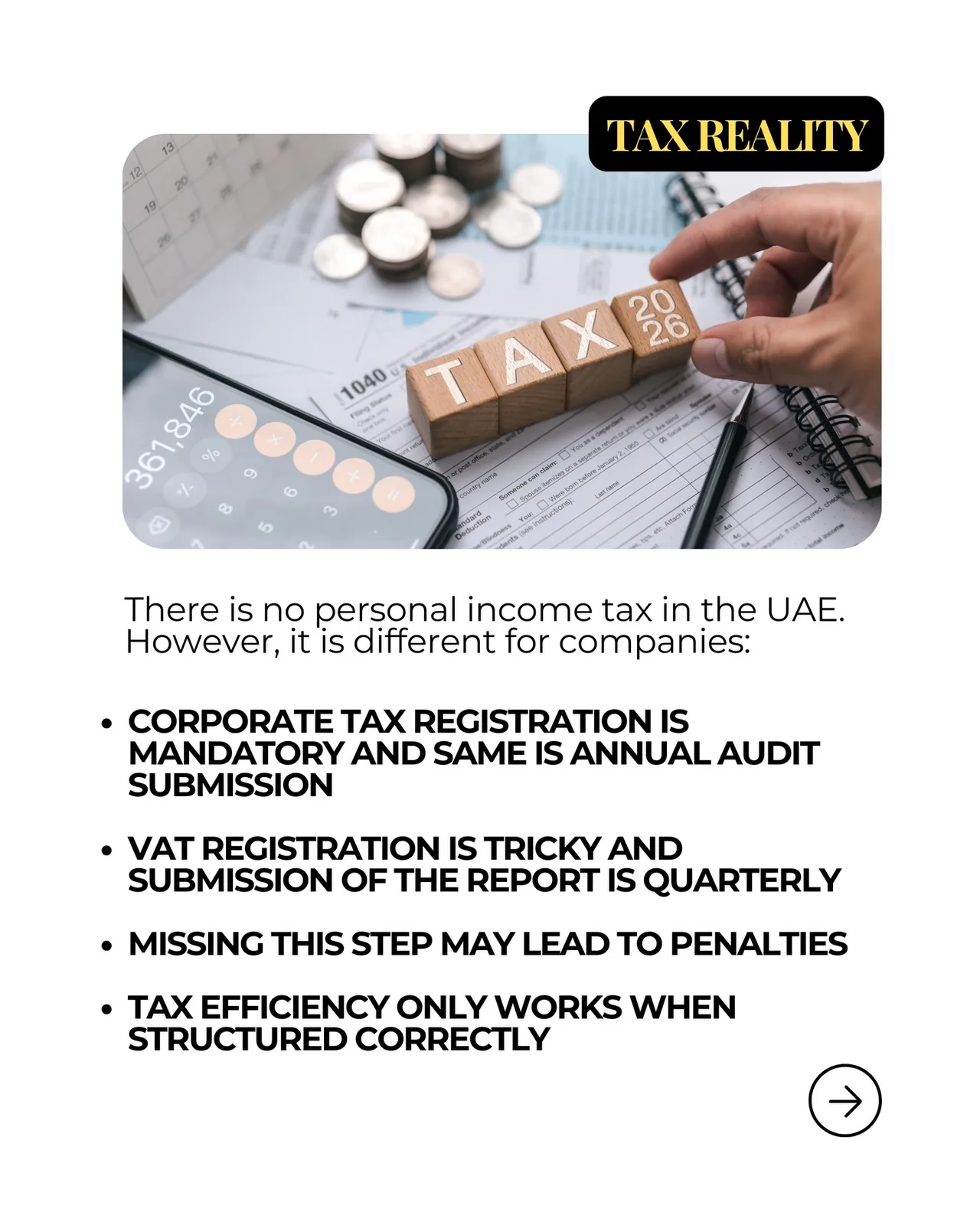
Corporate tax in the UAE is changing, and businesses need clear, practical guidance to follow the new rules while keeping the country’s advantages. We help you understand how these rules apply to your structure, especially if you operate from a free zone or combine free zone and mainland entities.
Our focus is to explain when corporate tax may apply to your company, how to qualify for available incentives, and how this connects with your wider corporate, substance and banking setup in the UAE, so you can plan with more clarity and fewer surprises.
In brief
- We help you understand how UAE corporate tax applies to your mainland or free zone company, including when the 0% rate can still apply and when the 9% rate is triggered.
- You receive practical, structure‑specific guidance that links tax treatment with your licensing, real substance in the UAE, and banking setup so you can plan with fewer surprises.
- Our support focuses on qualifying free zone status, qualifying income, and ongoing compliance conditions so you can preserve available incentives where possible.
What to do
Corporate tax in the UAE now sits alongside long‑standing incentives, especially in free zones. Not every free zone entity automatically keeps a 0% rate. It must qualify under detailed rules. The company needs to be incorporated or registered in a recognised free zone, avoid electing into the standard 9% regime, and maintain real substance in the zone with adequate assets and employees.
We help you map these rules to your actual structure. For free zone companies, this means assessing whether you can be treated as a Qualifying Free Zone Person and which of your revenue streams count as qualifying income. In practice, this often includes business with other free zone entities and overseas clients, and in some cases designated qualifying activities such as logistics, holding company functions or regulated financial services.
For groups using both mainland and free zone entities, we look at how activities and contracts are split, how substance is demonstrated, and how banking and compliance processes support your tax position. The aim is to keep your structure commercially sensible while aligning it with the evolving corporate tax framework, so you can benefit from available incentives without breaching the conditions attached to them.
What to keep in mind
The 0% corporate tax rate in UAE free zones is not automatic. To benefit, a company must be a Qualifying Free Zone Person: incorporated or registered in a recognised free zone, not opted into the standard 9% regime, and able to show substantive activity in the zone, including appropriate assets and employees.
Only certain revenue can enjoy the 0% rate. In general, income from doing business with other free zone entities or with clients overseas is treated as qualifying income, while non‑qualifying income may be taxed at 9%. Regulations also list specific qualifying activities, such as manufacturing, logistics and distribution from designated zones, holding company activities, and some regulated financial services.
If a free zone company fails to meet the ongoing conditions, or earns too much non‑qualifying income, it can lose access to the 0% rate and fall under the standard regime. This makes it important to review contracts, customer locations, and operational substance rather than relying on the free zone label alone. Rules continue to evolve, and authorities are expected to look at real activity in the UAE, not just registration documents, when assessing eligibility for incentives and compliance with the corporate tax framework.