
UAE Company Setup Hidden Costs
What this page covers
UAE Company Setup Hidden Costs
When you set up a company in the UAE, you commit not only to the first licence payment but also to ongoing obligations. These include annual licence renewal, visa and establishment card costs, office or flexi-desk renewal, and compliance with local regulations. If you do not plan for them, these recurring items can feel like hidden costs.
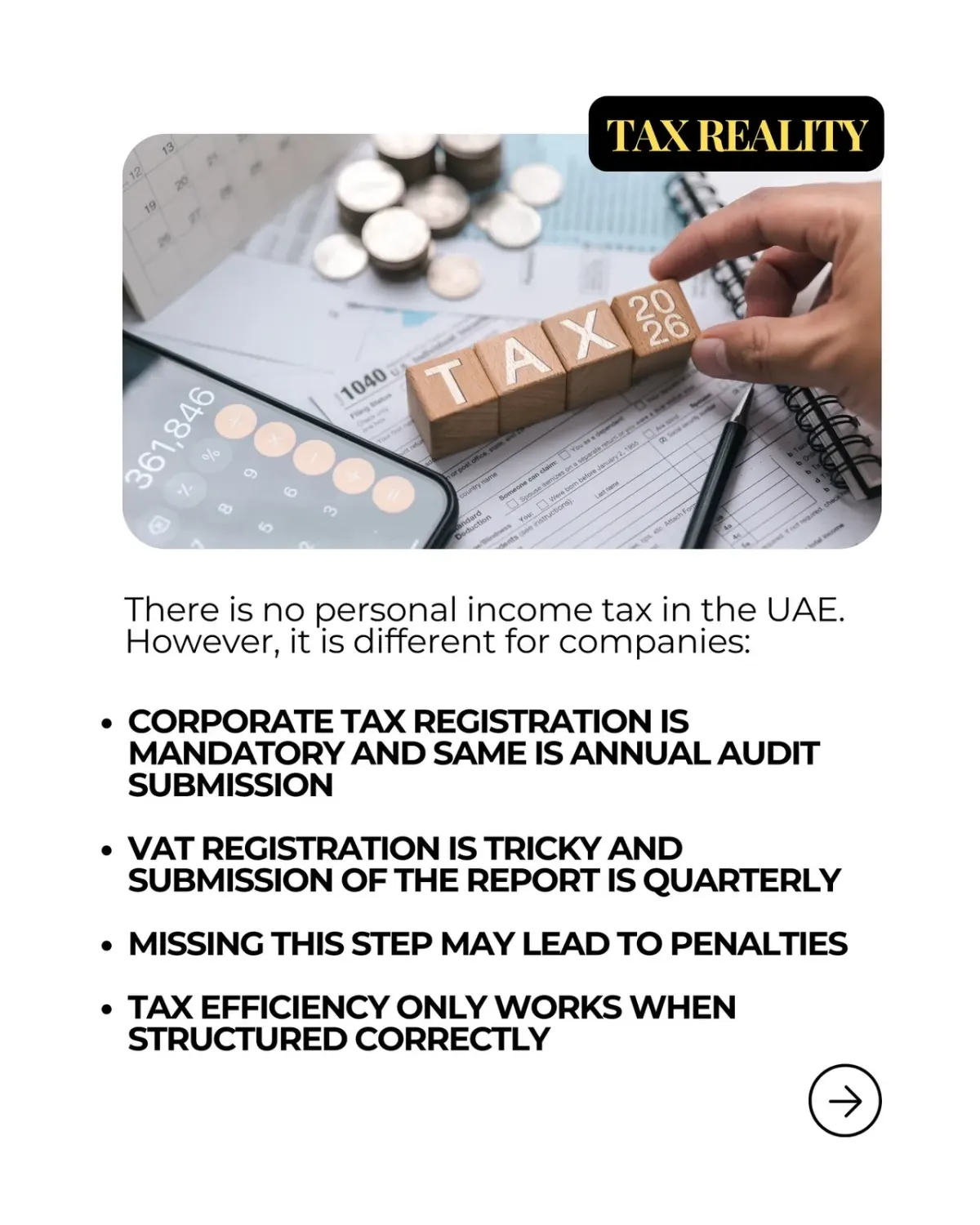
All UAE companies must register with the UAE tax authorities, and some activities may qualify for corporate tax relief or exemptions. Solutions & Management can review your case so you understand which tax, accounting and compliance obligations apply, and what benefits you may access, before you choose a free zone or mainland structure.
In brief
- Plan beyond the advertised licence fee. You also need to budget for annual trade licence renewal, visa and establishment card costs, office or flexi-desk renewal, accounting support and bank account maintenance.
- Hidden risks are often structural, not only financial. Choosing the wrong free zone, licence type or shareholder model can lead to restructuring, extra legal and government fees, compliance issues and banking delays.
- All UAE companies must register with the tax authorities and disclose real Ultimate Beneficial Owners. Non-compliance or trying to hide ownership can lead to penalties, blocked banking and, in serious cases, the risk of licence suspension.
What to do
The most effective way to avoid hidden costs is to design the right structure before you register. In the UAE, every company must register with the tax authorities and keep its trade licence, office arrangement, visas and accounting in good standing each year. If you rush into a cheap or generic package, you may later face new licence fees, government charges, advisory costs and bank requests to fix gaps in your structure or compliance.
Solutions & Management focuses on structure first, not headline price. We review your activity, ownership, residency, tax and banking needs, then match them with a suitable free zone or mainland option. Our team explains which activities may benefit from corporate tax exemptions, what UBO and ESR disclosures are required, and what your recurring obligations will cost in practice.
With this approach, you start with a compliant, bankable setup and a clear forecast of ongoing expenses. You reduce the risk of surprise renewals, fines or restructuring, and you can plan your cash flow and expansion knowing how your UAE company will be treated by regulators, banks and counterparties.
What to keep in mind
UAE regulations now require every company to disclose its true Ultimate Beneficial Owners. Using a local friend or proxy as a shareholder while you control the business from abroad does not remove this obligation. Banks will still request passport copies, source-of-funds details and background information for each UBO, and attempts to conceal the real owner can derail account opening and trigger compliance reviews.
Informal nominee arrangements also carry legal and financial risk. The nominee’s name is on the shares, so the foreign founder has limited protection if a dispute arises. At the same time, the UAE has introduced penalties for inaccurate UBO reporting and tightened anti-money-laundering rules. A structure that looks cheap at registration can become expensive once you factor in fines, banking delays, extra accounting work and the cost of unwinding a non-compliant setup.
Restructuring a poorly planned company usually means new licence applications, additional government charges, legal drafting, tax and compliance reviews and lost time. In many cases, the total spend ends up higher than if the business had been structured correctly from day one. Opening a UAE company is therefore less about speed and more about jurisdiction strategy: choosing the right authority, licence type, tax position and ownership model for your long-term plans.