
Register for vat uae
What this page covers
Register for vat uae
VAT in the UAE is a standard 5 percent tax charged on most taxable supplies of goods and services. If your business is active in the UAE market, knowing when you must register for VAT is essential to staying compliant with the Federal Tax Authority (FTA).
Whether you operate on the mainland or in a free zone, VAT registration is generally required once you cross the mandatory registration threshold. Choosing the right structure and timing your VAT registration can also support your wider goals, from local expansion to international operations.
In brief
- Mainland company structures are often better suited for UAE-wide expansion, giving you more flexibility once you are VAT registered and trading with customers across the country.
- Free zone setups can work well for internationally focused businesses, but most free zones are still fully within the scope of UAE VAT once registration thresholds are met.
- Designing your structure and registration strategy with VAT in mind helps you balance compliance and growth, whether you choose a mainland licence, a free zone, or a mix of both.
What to do
When you register for VAT in the UAE, you enter a tax system that applies to both mainland and most free zone businesses. Mainland companies benefit from recent legal changes that allow 100 percent foreign ownership in many sectors, removing the need for a local sponsor in a wide range of activities while still operating fully within the VAT regime.
Free zones are often chosen for their advantages in handling cross-border business, and they can be particularly attractive if your operations are mainly international. However, from a VAT perspective, most free zones are treated similarly to the mainland once your taxable supplies reach the registration threshold, so you should plan your structure with both VAT and commercial goals in mind.
Because VAT registration is tied to your actual business activities and turnover, the right approach is to look at where your customers are, how you trade, and how quickly you expect to grow. Aligning your VAT position, registration timing, and reporting with your chosen setup can support smoother expansion, clearer records, and fewer surprises as your UAE business develops.
What to keep in mind
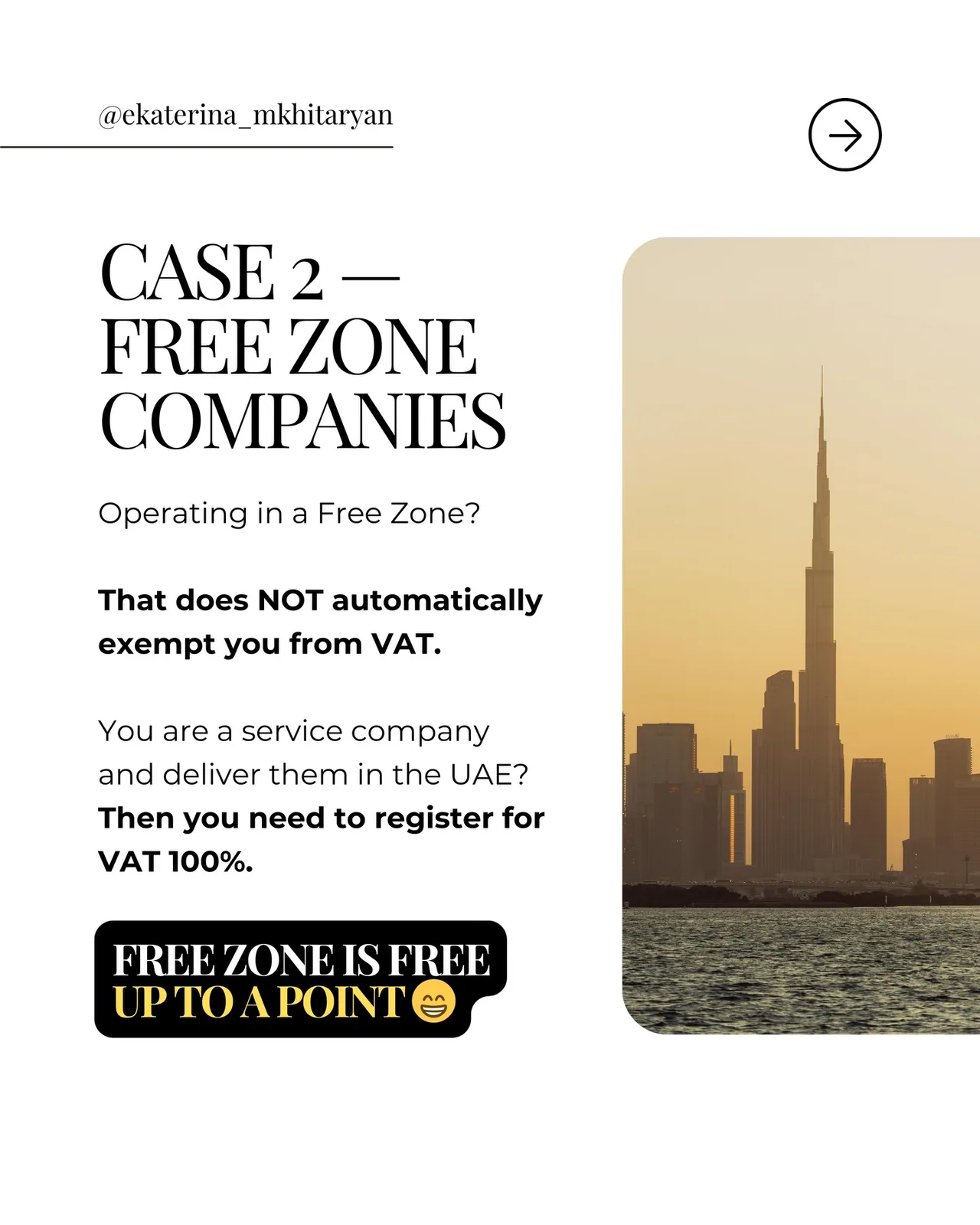
Most free zones in the UAE are fully within the scope of VAT, meaning that once you meet the registration threshold you are expected to register and charge VAT much like a mainland business. Only specific areas listed as designated zones receive special treatment, and even then the relief is limited to particular goods transactions.
Designated zones are treated as outside the UAE for VAT purposes only for certain movements of goods, such as transfers between designated zones or exports, which can be handled without VAT if customs controls are respected. When goods move from a designated zone into the mainland, the recipient must account for 5 percent import VAT, so location alone does not remove your VAT obligations.
Services are not covered by the designated zone relief, so a consultancy or similar service provider in a free zone still needs to consider UAE VAT in the same way as a mainland company. If you are part of a wider group of related entities, VAT grouping may be available to simplify reporting, but it requires that specific conditions are met and that all members are treated as a single taxable person for VAT purposes.