
VAT Deregistration in the UAE
What this page covers
VAT Deregistration in the UAE
VAT deregistration in the UAE should start with a clear review of whether the business still has taxable activity, VAT reporting duties, imports, or pending VAT returns.
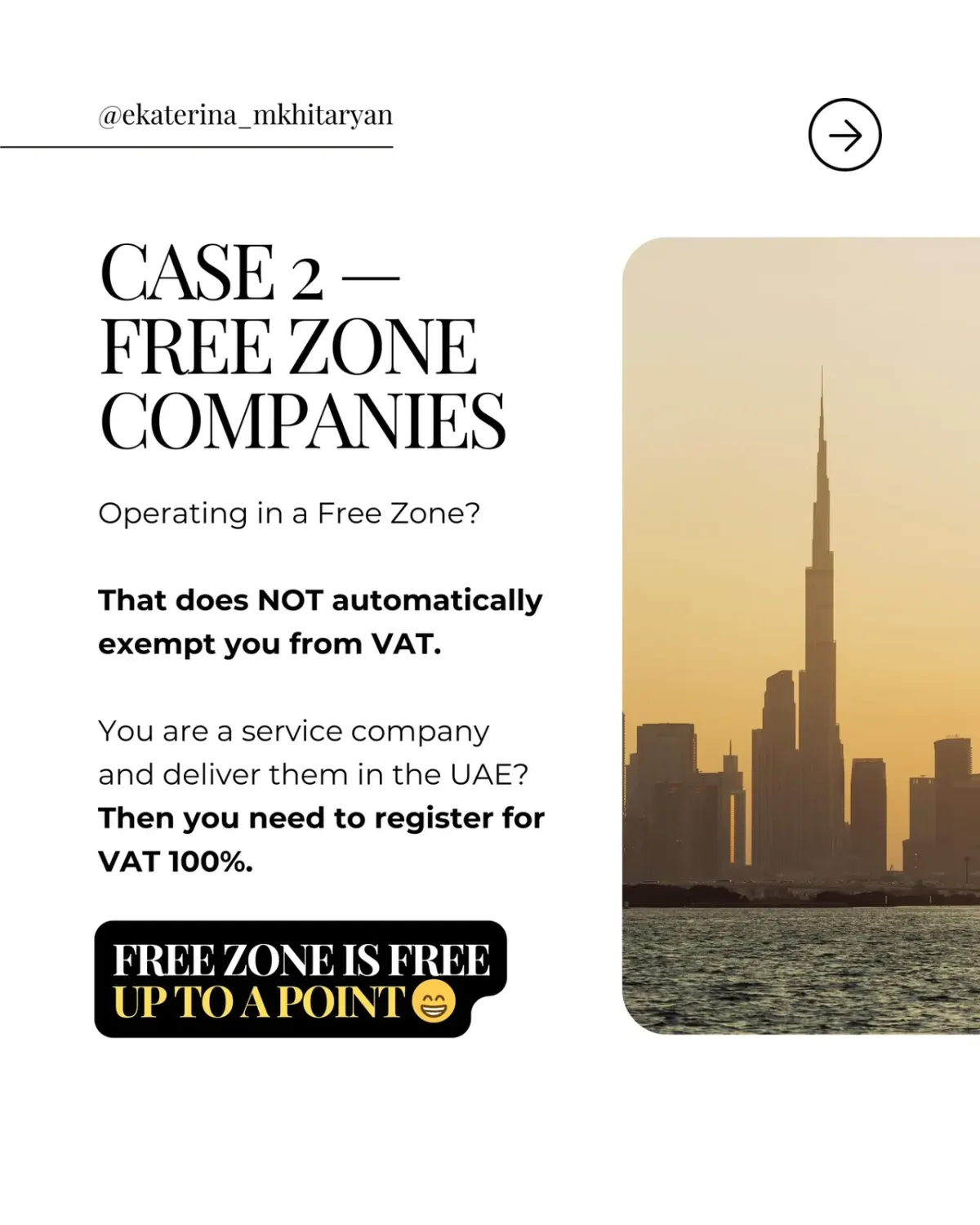
A free zone licence does not automatically remove VAT obligations. Companies may still need to remain registered if they make taxable supplies or provide services in the UAE.
In brief
- VAT registration is generally mandatory when taxable supplies and imports exceed AED 375,000 over the past 12 months, with standard VAT charged at 5%.
- A company may need to apply for VAT deregistration if it stops making taxable supplies or no longer meets the conditions for VAT registration.
- Before deregistering, review VAT returns, imports, reverse charge entries, input tax claims, TRN use, and whether taxable activity will continue.
What to do
A VAT deregistration review should focus on the real business activity, not only the licence type or registered location. The key questions are whether taxable supplies are still being made, whether services are delivered in the UAE, and whether imports or taxable expenses continue.
Accounting records are important because VAT status affects return filing, input tax recovery, exempt activity, and import treatment. If costs relate to both taxable and exempt supplies, input VAT should be calculated carefully to avoid over-claims.
For VAT-registered businesses that import goods or receive services from overseas, VAT may need to be reported through the reverse charge mechanism. Any deregistration step should be checked against the next VAT return and any TRN-linked customs position.
What to keep in mind
Free zone status alone is not a safe reason to assume VAT no longer applies. If the company still provides services in the UAE or continues taxable supplies, its VAT position should be reviewed before applying for deregistration.
Input VAT claims may need to be restricted when business expenses support both taxable and exempt activities. Over-claimed VAT can lead to Federal Tax Authority adjustments and penalties if identified later.
If a business is not VAT-registered and is not required to register, VAT paid at customs on imported goods may become a direct cost because it cannot be recovered. This makes the VAT status review commercially important.