
Partner visa uae
What this page covers
Partner visa uae
A UAE partner or investor visa is linked to your ownership in a local company and gives you the right to live in the country while you build and manage your business. It is different from an employee work visa, which is tied to a labour contract and a specific employer.
With a partner visa you can usually sponsor close family members and, for mainland structures, domestic staff, while your company can also sponsor employees. In free zones, visa quotas depend on your licensed office space and the specific rules of each free zone authority.
In brief
- A partner visa in the UAE is a residency option connected to your shareholding in a company, rather than to an employment contract, and is commonly used by business owners and investors who want more control over their status.
- Mainland companies can apply for visas for employees and may sponsor family or domestic staff, while free zone entities receive a visa quota that is typically determined by the size and type of office space they lease from the free zone.
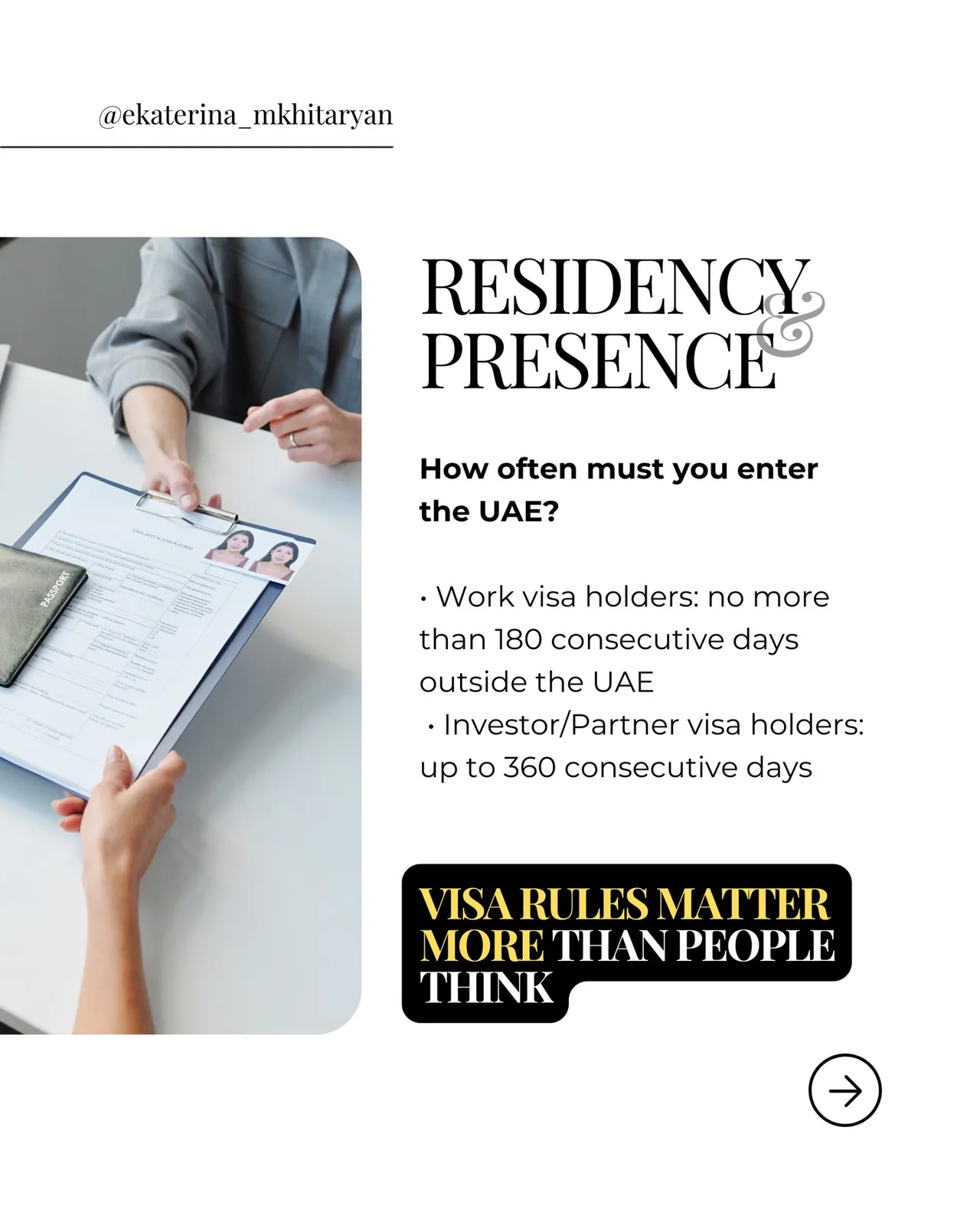
- Presence rules differ from standard work visas. Investor or partner visa holders can usually stay outside the UAE for up to 360 consecutive days, whereas work visa holders are generally limited to 180 consecutive days abroad to keep their residency valid.
What to do
Choosing a partner visa starts with deciding where to establish your company: mainland or a UAE free zone. A mainland structure allows you to link your residency to a business that can operate directly in the onshore UAE market, while a free zone structure links your visa to a company that is primarily geared towards international business, subject to each free zone’s rules and restrictions.
From a visa and sponsorship perspective, mainland businesses can apply for visas for an unlimited number of employees in line with their real operational needs and can also sponsor family or domestic staff, subject to immigration rules. In free zones, the number of visas available is usually capped by the office space you lease, so your physical office size becomes a key factor when planning how many partner, employee, or support visas you can obtain.
Residency rules for partner visa holders are more flexible than for standard work visas. Work visa holders are generally not allowed to remain outside the UAE for more than 180 consecutive days, while investor or partner visa holders can typically stay abroad for up to 360 consecutive days. Understanding these rules helps you plan travel, maintain your residency status, and structure your business presence in a way that supports your lifestyle and long‑term plans in the UAE.
What to keep in mind
A partner visa is suitable if you are ready to hold shares in a UAE entity and want your residency to be tied to that ownership. It is less suitable if you only plan to work as an employee, in which case a standard work visa sponsored by your employer is usually more appropriate. The choice of jurisdiction, such as mainland or a particular free zone, will shape how your visa is issued and maintained.
Mainland companies benefit from broad market access, allowing you to trade directly within the UAE market. Free zone companies are typically focused on international trade and may need a local distributor or other structure to serve the onshore UAE market. These commercial differences sit alongside visa considerations, so your preferred business model and target customers should guide where you set up and which partner visa route you follow.
Visa rules are strict and can affect your residency if you are away from the UAE for long periods. Work visa holders are generally limited to 180 consecutive days outside the country, while investor or partner visa holders can usually remain abroad for up to 360 consecutive days. Because regulations and practices can change, it is important to review your specific situation, company structure, and the latest immigration rules before relying on any particular stay‑outside‑the‑UAE period.